Tasbīhāt: The Prophet’s (saw) Circle of Dhikr
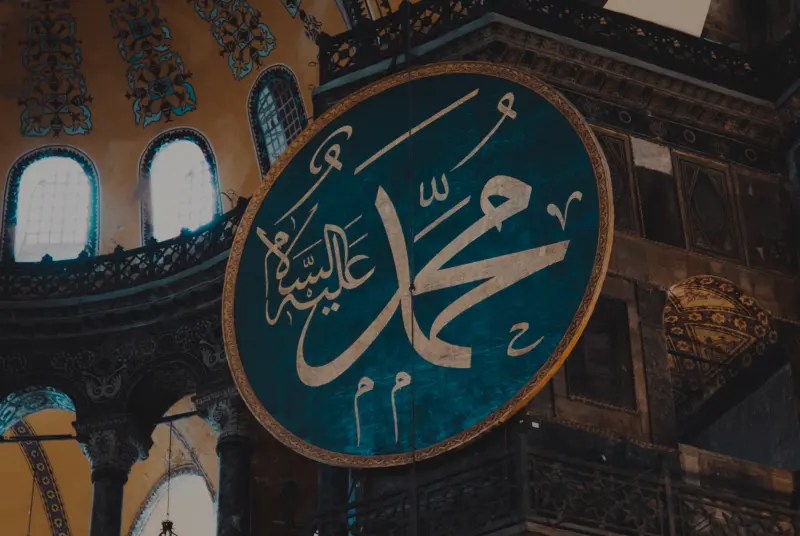
Because one of our brothers had become negligent in performing the tasbīhātRepeated praises and glorifications of Allah recited in established formulas. after the prayer, I said:
The tasbīhātRepeated praises and glorifications of Allah recited in established formulas. after the prayer belong to the way of Muhammad (saw)Sallallāhu alayhi wa sallam (Peace and blessings be upon him) and are the daily supplications of his walāyahThe spiritual state of a person who has attained high spiritual ranks.. From this perspective, they are of great importance.”
Then the reality of these words unfolded as follows:
Just as the walāyahThe spiritual state of a person who has attained high spiritual ranks. of Muhammad (saw)Sallallāhu alayhi wa sallam (Peace and blessings be upon him), which has been transformed into prophethood, is exalted above all other forms of walāyahThe spiritual state of a person who has attained high spiritual ranks., so too are the tasbīhātRepeated praises and glorifications of Allah recited in established formulas. after the prayer, which belong to the way of that exalted walāyahThe spiritual state of a person who has attained high spiritual ranks. and are among the special awrādRegularly recited supplications and dhikr performed to attain closeness to Allah. of that supreme walāyahThe spiritual state of a person who has attained high spiritual ranks., superior to all other awrādRegularly recited supplications and dhikr performed to attain closeness to Allah. and spiritual paths.
Furthermore, this mystery was disclosed to me in the following manner:
Just as one experiences a luminous spiritual atmosphere during a gathering of dhikrThe remembrance of Allah through the repeated recitation of a word or short phrase as an act of worship. or a Naqshbandi khatmahA religious gathering or practice in which a complete recitation of the Qur’an, specific supplications, or forms of dhikr are completed., arising from the participants’ spiritual connection with one another, so too does a person with an awakened heart, when he says after the prayer:
سُبْحَانَ اللّٰهِ ۞ سُبْحَانَ اللّٰهِAllah is far above all imperfections. Allah is far above all imperfections.
and performs his tasbīhThe glorification of Allah by declaring Him free from all imperfections., feel spiritually that he is glorifying Allah together with one hundred million believers under the leadership of the Prophet Muhammad (saw)Sallallāhu alayhi wa sallam (Peace and blessings be upon him), the guide of that Dhikr CircleA gathering where people engage in dhikr and remember Allah together..
Within that atmosphere of grandeur and exaltation, he says:
سُبْحَانَ اللّٰهِ ۞ سُبْحَانَ اللّٰهِAllah is far above all imperfections. Allah is far above all imperfections.
Then, in obedience to the spiritual command of the leader of that Dhikr CircleA gathering where people engage in dhikr and remember Allah together., he says:
اَلْحَمْدُ ِللّٰهِ ۞ اَلْحَمْدُ ِللّٰهِAll praise belongs to Allah. All praise belongs to Allah.
At that moment, he feels himself spiritually included in the sublime praise arising from the
اَلْحَمْدُ ِللّٰهِ ۞ اَلْحَمْدُ ِللّٰهِAll praise belongs to Allah. All praise belongs to Allah.
of one hundred million murīdsDisciples who follow the guidance of a spiritual teacher in their journey toward closeness to Allah. within that Dhikr CircleA gathering where people engage in dhikr and remember Allah together. and that vast khatmahA religious gathering or practice in which a complete recitation of the Qur’an, specific supplications, or forms of dhikr are completed. of Muhammad (saw)Sallallāhu alayhi wa sallam (Peace and blessings be upon him), and inwardly participates in it with his own
اَلْحَمْدُ ِللّٰهِAll praise belongs to Allah.
The same applies thereafter to
اَللّٰهُ اَكْبَرُ ۞ اَللّٰهُ اَكْبَرُAllah is the Greatest. Allah is the Greatest.
and, after the supplication, to
لاٰ اِلٰهَ اِلاَّ اللّٰهُ ۞ لاٰ اِلٰهَ اِلاَّ اللّٰهُThere is no god except Allah. There is no god except Allah.
When he recites these words thirty-three times within the Dhikr CircleA gathering where people engage in dhikr and remember Allah together. and the great khatmahA religious gathering or practice in which a complete recitation of the Qur’an, specific supplications, or forms of dhikr are completed. of the way of Muhammad (saw)Sallallāhu alayhi wa sallam (Peace and blessings be upon him), he remembers all his brothers within that circle and khatmahA religious gathering or practice in which a complete recitation of the Qur’an, specific supplications, or forms of dhikr are completed.. Then he turns toward the person of Muhammad (saw)Sallallāhu alayhi wa sallam (Peace and blessings be upon him), the leader of that Dhikr CircleA gathering where people engage in dhikr and remember Allah together., and says:
اَلْفُ اَلْفِ صَلاَةٍ وَ اَلْفُ اَلْفِ سَلاَمٍ عَلَيْكَ يَارَسُولَ اللّٰهِMillions of blessings and millions of greetings of peace be upon you, O Messenger of Allah.
I understood this, felt it, and saw it in my imagination. From this, the immense importance of the tasbīhātRepeated praises and glorifications of Allah recited in established formulas. after the prayer becomes clear.