Biography
The Life of Bediuzzaman Said Nursi
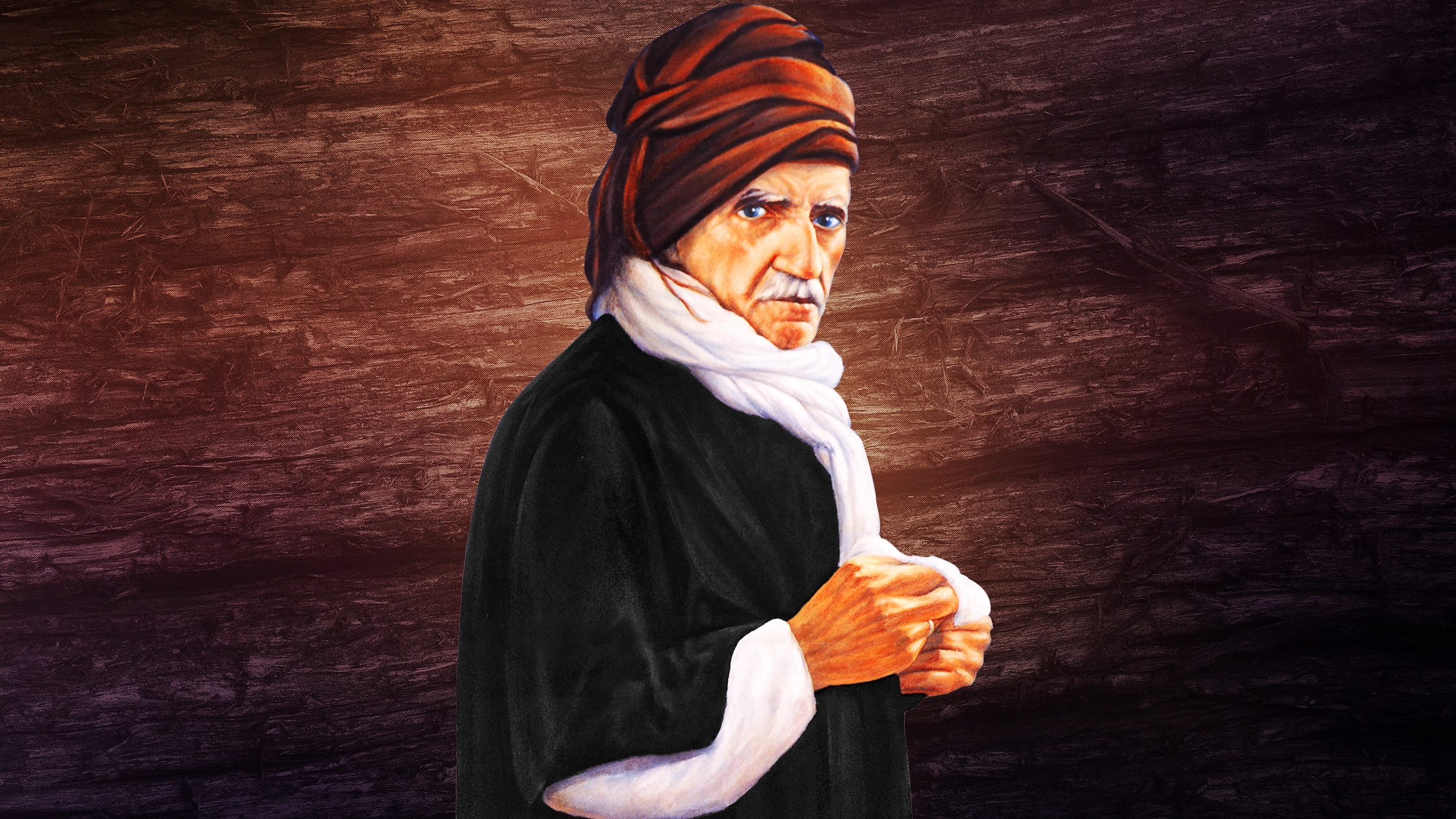
The remarkable life of Imam Said Nursi, known in Turkey as Ustad Bediuzzaman, has been documented in countless books due to the extraordinary events that marked every stage of his life. Presenting a concise biography of such a distinguished figure is therefore no easy task.
Imam Nursi was not only highly accomplished in the classical Islamic sciences, but also excelled in the modern sciences. He was a universal thinker of remarkable precision, a respected Islamic scholar, a courageous volunteer commander in defense of freedom, a lifelong teacher to millions, an advocate of positive and constructive engagement, and a charismatic and highly successful leader of the Muslim community in the modern era.
Below is a brief overview of some of the most significant events of his life, presented under five main themes.
The Ottoman State at the Time of His Birth
The year Bediuzzaman Said Nursi was born coincided with a period of great upheaval for the Ottoman Empire. The empire was engaged in war with Russia on both the Balkan and Caucasian fronts. The Russo-Turkish War of 1877–1878, known in Ottoman history as the "War of '93" according to the Rumi calendar, had far-reaching consequences for both the Ottoman State and Europe.
Russian encouragement of Serbian nationalism led to uprisings in Bosnia-Herzegovina and Montenegro, triggering a conflict that affected much of Europe. During this period, the Ottoman Empire introduced its first modern constitution and established a constitutional parliamentary system, bringing major political, social, and economic changes.
Following Russia's declaration of war in April 1877, Ottoman forces suffered continuous setbacks. In the west, Russian troops captured Plevna and advanced to within 18 kilometres of Istanbul, reaching Yeşilköy. In the east, they occupied Ardahan, Oltu, and Kars, and advanced as far as Erzurum.
At the same time, the empire faced a severe economic crisis. Poverty and epidemics made survival difficult for much of the population. Parliament had suspended its activities due to the ongoing war and its inability to address the country's urgent challenges.
The war ended with the Treaty of San Stefano, signed at Yeşilköy, through which the Ottoman Empire lost nearly all of its Balkan territories. Romania, Serbia, and Montenegro gained independence, while the Principality of Bulgaria was established. On the Caucasian front, Batum, Kars, Ardahan, and Doğubayazıt were ceded to Russia. Heavy war reparations further weakened the economy, while the mass migration of Muslims and Turks from the lost territories intensified the empire's difficulties.
Childhood and Education
It was amid these historic events, often regarded as the beginning of a new era, that Bediuzzaman Said Nursi was born in 1878 in the village of Nurs, near Bitlis in eastern Turkey.
Nursi was a Sayyid, a descendant of the Prophet Muhammad (saw). Through his father, his lineage traced back to Hasan (ra), and through his mother to Husayn (ra), the two grandsons of the Prophet (saw).
His earliest education came from his brother, Molla Abdullah. During his studies at various madrasas in eastern Anatolia, he quickly distinguished himself through his exceptional memory, intelligence, and courage. His extraordinary intellectual abilities were soon recognized by the scholars of the region.
In an astonishingly short period of approximately three months, he completed the traditional Ottoman madrasa curriculum and successfully passed all examinations. He also defended his views in scholarly discussions and debates. The level of learning he attained at such a young age amazed everyone who encountered him.
Because of his ability to grasp even the most complex subjects with ease and to memorize entire books after studying them, the scholars of his time gave him the title "Bediuzzaman", meaning "Wonder of the Age."
Driven by extraordinary determination and self-discipline, he memorized around ninety major works in the Islamic sciences, many of them highly advanced and technical texts. A course of study that normally required fifteen years was completed by him in only a fraction of that time.
His Vision for Educational Reform
At the age of nineteen, Bediuzzaman moved to Van. There he became convinced that a proper understanding of modern sciences was essential for presenting Islam in a way that could address the intellectual challenges of the age.
Acting on this conviction, he devoted himself to mastering subjects such as mathematics, geology, physics, chemistry, astronomy, history, geography, and philosophy. During his fifteen years in Van, he actively taught, advised, and guided local tribes while also establishing his own madrasa, known as Horhor.
Among his scholarly works from this period was an advanced commentary on Ismail Gelenbevi's Burhan, a renowned text on logic.
Inspired by the need to harmonize the traditional Islamic sciences with the modern sciences of Europe, Bediuzzaman conceived a groundbreaking educational institution called Madrasat al-Zahra. He envisioned it as a university in eastern Anatolia where both religious and modern sciences would be taught together.
To gain official support for this project, he travelled to Istanbul.
While staying in the Fatih district, he famously hung a sign on his door that read:
"All problems are solved here and all questions are answered, but no questions are asked."
Scholars from across Istanbul visited him after hearing of his reputation, and he answered their questions with remarkable expertise. Through this unusual gesture, he sought to draw attention to the needs of eastern Anatolia and to secure support for the establishment of Madrasat al-Zahra.
Unfortunately, the political turmoil of the early twentieth century prevented the government from supporting his vision. Later, the outbreak of the First World War and the Russian invasion of the region forced the project to be postponed indefinitely.
After the war, however, Nursi would fulfil much of this educational mission through a different means: the writing of the Risale-i Nur, which applied Islamic scholarship to the pressing intellectual and spiritual questions of the modern age.
Public Service and the First World War
For a period, Bediuzzaman remained in Istanbul, hoping to positively influence public affairs. After returning to Van, he focused on educating and guiding the local tribes. The lessons he delivered there were later collected in his work al-Munazarat.
He also travelled to Damascus, where he delivered his famous sermon in the Umayyad Mosque, later published as The Damascus Sermon.
During the First World War, Bediuzzaman served as the commander of a volunteer battalion composed largely of his own students. He fought in defense of the eastern Ottoman territories against the Russian army.
Even amid the hardships of trench warfare and active combat, he dictated his Qur'anic commentary Isharat al-I'jaz (Signs of Miraculousness), which is regarded as a masterpiece of Qur'anic exegesis.
Following the Russian occupation of Bitlis, the wounded Nursi was captured and taken prisoner to Siberia, where he remained for two and a half years. During his captivity, he continued to teach and provide spiritual guidance to fellow prisoners.
Eventually he escaped and travelled through St. Petersburg, Warsaw, and Vienna before arriving in Istanbul on 25 June 1918. Soon afterwards, he was appointed to the prestigious Islamic scholarly body Dar al-Hikmat al-Islamiyya.
The Ottoman Empire was defeated in the First World War, after which British, French, Italian, and Greek forces quickly began occupying its territories. In response, the Turkish War of Independence emerged across the country. Nursi actively encouraged and supported the National Forces that were resisting the occupying powers throughout Turkey.
The government in Ankara approved of Nursi's efforts and invited him to the capital, where he was warmly welcomed. However, Nursi was far from impressed by the spiritual atmosphere he encountered there. He observed, among other things, that many members of parliament showed little interest in religion and neglected the prescribed daily prayers.
In response, he issued a ten-point circular emphasizing the importance of prayer and adherence to the sacred principles of Islam. As a result, the number of parliamentarians who performed their prayers regularly increased significantly. Mustafa Kemal, however, was deeply displeased by this initiative. Nursi believed that Mustafa Kemal sought to steer the country away from religion under the banner of secularism, and the circular led to a serious confrontation between the two men.
Nevertheless, in an apparent attempt to win him over, Mustafa Kemal offered Bediuzzaman a seat in parliament as well as the position of chief religious authority for all of Eastern Turkey. Nursi declined both offers, much as the Prophet Muhammad ﷺ rejected offers of power and wealth from the Meccan polytheists, who hoped to persuade him to abandon his mission.
Instead, during this turbulent and dangerous period, Nursi withdrew into spiritual retreat. Shortly after the abolition of the Caliphate in 1924, a rebellion broke out. Following considerable bloodshed, the uprising was suppressed. Although Nursi had no involvement in the rebellion and in fact disapproved of it, he was nevertheless exiled in 1925 on allegations of association with the movement.
He was first taken to Istanbul, then transferred to Burdur, and later to Isparta. From there, the authorities confined him to Barla, a small village near Isparta, where he was kept under strict surveillance. The intention was to monitor his every movement and prevent him from maintaining contact with the wider public.
The New Said Period
Bediuzzaman later divided his life into two distinct phases: the Old Said and the New Said.
The Old Said period included his involvement in social and public affairs. The New Said period began around 1921 and was characterized by his complete dedication to strengthening faith and serving the Qur'an through the writing of the Risale-i Nur.
After the abolition of the Caliphate in 1924, political unrest led to widespread repression. Although Nursi neither supported nor participated in the rebellion that followed, he was nevertheless exiled in 1925. He was sent first to Istanbul, then to Burdur, and later to Barla, a remote village near Isparta, where he was kept under strict surveillance.
Despite these restrictions, he began dictating the Risale-i Nur Collection. Since he did not write by hand himself, trusted students secretly visited him and wrote down the treatises as he dictated them. Often these sessions took place in secluded mountain areas to avoid detection.
During his eight years in Barla, approximately three-quarters of the Risale-i Nur was composed.
His students painstakingly copied the treatises by hand and distributed them throughout Anatolia. This remarkable manuscript movement played a crucial role in preserving Islamic faith and learning during a period of intense secularization.
Trials, Imprisonment, and Perseverance
Over the following decades, Bediuzzaman and many of his students faced repeated arrests, trials, imprisonment, and exile.
In 1935, he and 120 students were tried in Eskişehir. After his release, he was exiled to Kastamonu, where he spent another eight years under surveillance.
In 1943, he and 126 students were brought before the High Court in Denizli. The Risale-i Nur was carefully examined by an expert committee of scholars and judges. In 1944, he was acquitted of all charges. The court concluded that neither he nor the Risale-i Nur had any political agenda.
Throughout these years he endured harsh prison conditions, isolation, repeated poisonings, and constant pressure from the authorities. Yet none of these hardships succeeded in deterring him from his mission.
Following the introduction of multi-party democracy in Turkey in 1950 and the election of the Democrat Party, restrictions gradually eased, allowing Bediuzzaman and his students greater freedom.
His Passing
After a lifetime devoted to serving faith and the Qur'an, marked by immense sacrifice and perseverance, Imam Said Nursi passed away shortly before dawn on 23 March 1960, corresponding to the 25th of Ramadan 1379 AH.
The following day, vast crowds gathered to perform his funeral prayer at the Ulu Mosque in Şanlıurfa. He was then carried to the Halilur-Rahman Mosque, where he was buried.
However, following the military coup of 27 May 1960, a new period of repression began. On 12 July 1960, the authorities secretly removed his body from its grave and transferred it to an undisclosed location. The exact location of his grave remains unknown to this day.
The Risale-i Nur After His Passing
After Bediuzzaman's death, his students, companions, and followers continued to spread the Risale-i Nur throughout Turkey and beyond.
In 2014, Turkey's Presidency of Religious Affairs (Diyanet) began publishing the works of Bediuzzaman officially.
By the grace of Allah, the Risale-i Nur has now been translated into more than 65 languages, including English, enabling people across the world to benefit from the writings and legacy of this extraordinary scholar.